|
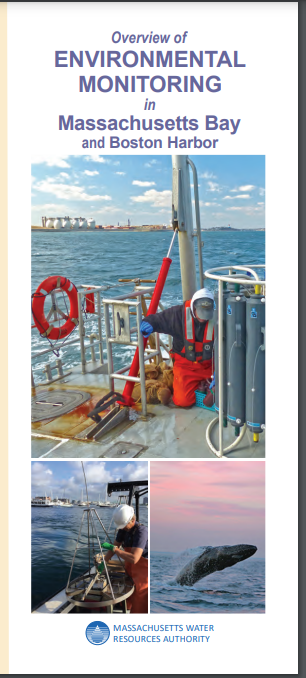
Massachusetts Bay The Massachusetts Water Resources Authority (MWRA) officially opened the Massachusetts Bay effluent outfall in September 2000, and stopped discharging treated wastewater (effluent) to Boston Harbor. The results shown by years of monitoring are a cleaner Harbor and a healthy Bay. Printable pamphlet on MWRA monitoring.
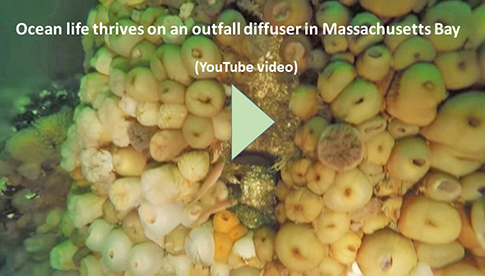
MWRA has monitored the bay's water quality since 1992, as part of a carefully designed Ambient Monitoring Program. We have found that while effluent quality has improved, animal communities in the bay continue to thrive. Images from the outfall reflect a healthy, vibrant ecosystem. MWRA monitors bacteria around the MWRA outfall and elsewhere in Massachusetts Bay.
Also receiving a clean bill of health are Cape Cod Bay and Stellwagen Bank National Marine Sanctuary, a feeding ground for the right whale. Detailed results are available in the annual Outfall Monitoring Overview.
Updated February 17, 2023 |