 |
| Home |
| Water System |
| Sewer System |
| Harbor and Bay |
| School Program |
| About MWRA |
| Doing Business with MWRA |
| Contact MWRA |
Does MWRA water contain lead?
MWRA water is lead-free when it leaves the reservoirs. MWRA and local distribution pipes that carry the water to your community are made mostly of iron and steel, and do not add lead to water. However, lead can get into tap water through a lead service line connecting your house to the pipe in the street, or pipes in the home, lead solder used in plumbing, and some brass fixtures. Corrosion or wearing away of lead based materials can add lead to tap water, especially if water sits for a long time in the pipes before use.
More about Lead in Drinking Water
Do faucets contain lead?
Most faucets purchased prior to 1997 were constructed of brass or chrome-plated brass, which contain up to 8 percent lead (the main metals in brass are copper and zinc). Water sitting for several hours or overnight in a brass faucet can leach lead from the brass faucet interior which may produce high lead levels in the first draw of drinking water. Later regulations mandated that most faucets purchased after 1997 contain less lead than previously used thereby reducing the possible leaching of lead. However, the most recent legislation, called “Get the Lead Out,” mandates that after January 4, 2014, all faucets purchased will contain no more than a weighted average of 0.25 percent lead in relation to wetted surface.
More about Lead in Drinking Water
How can I tell if my faucet is "lead free"?
Responding to recent regulations, faucet manufacturers have decreased or eliminated the lead in residential kitchen faucets, bathroom faucets, bar faucets, drinking fountains, and icemakers. Starting January 4, 2014, all faucets will be produced with no more than a weighted average of 0.25 percent lead with respect to the wetted surface. The national standard for certifying plumbing fixtures "lead free" status is determined by the National Sanitary Foundation (NSF) - the standard is International Standard 61-Section 9. New faucets meeting the NSF 61 standard will have NSF 61/9 stamped on the new faucet’s cardboard box. For more information on lead-free fixtures including catalogs and website directories, contact NSF at 1-800-NSF-MARK or www.nsf.org.
Are there any faucets with no lead at all?
Some faucet manufactures produce plastic faucets that have virtually zero lead. Other manufactures are substituting other metals for the lead in the brass, inserting copper tubes inside the brass faucets, or applying special coatings on the inside of the faucets in order to minimize or eliminate lead leaching. With the recent legislation, more and more faucet manufacturers are advertising faucets that adhere to the new “lead-free” definition allowing a maximum of 0.25 percent lead.
Does it really matter if I have an ultra-low lead faucet?
In extreme cases, older faucets can contribute up to one-third of the lead in water that has been sitting in the pipes for several hours, with the remainder coming from other plumbing such as pre-1988 lead solder joints in copper pipes or a lead service line. Residents who let the water run at the tap in the morning for one minute and use cold water for cooking should have little concern with respect to lead in the drinking water. If residents are still concerned, they can have their water tested.
Do some new plumbing fixtures still contain lead?
Federal and State lead regulations do not cover any pipes, pipe fittings, plumbing fittings, or fixtures, that are used exclusively for nonpotable services like manufacturing, industrial processing, irrigation, outdoor watering, or other uses where the water is not anticipated to be used for human consumption. This includes toilets, bidets, urinals, fill valves, flushometer valves, tub fillers, shower valves, service saddles, or water distribution main gate valves that are two inches in diameter or larger.
Be sure that only valves and filters intended for drinking water supply are used in any home plumbing project.
Do some new plumbing fixtures still contain lead?
Federal and State lead regulations do not cover hose bibs, bathtub fixtures, shower heads, and industrial faucets.
Is drinking water the main source of lead exposure?
Lead contamination from lead-based paint, dirt, and dust accounts for most of the exposure. Lead from drinking water can make up to 20 percent of a person’s total exposure to lead.
The most cost effective ways to minimize lead exposure from drinking water are:
- flush the kitchen faucet for one minute in the morning or after coming home from school/work
- use only cold water for drinking and cooking
- get your water tested.
How do I get information about lead in my drinking water?
The Massachusetts Department of Public Health (DPH) has information on childhood lead poisoning prevention through the Massachusetts DPH Lead Exposure Office at (617) 284-8400 or its website.
The NSF certifies plumbing fixtures, water filters, and bottled water and can be reached at 1-800-NSF-MARK or through their website at www.nsf.org.
The Environmental Protection Agency (EPA) operates a National Lead Information Center and can be reached at 1-800-424-LEAD or through its website.
About Lead Service Lines
A service line is the pipe that connects your house to the water main in the street. Some service lines that run from older homes (usually those built before 1940) to the utility water main are made from lead. Over time, many of these older used service lines have been replaced, but your home could still have one.
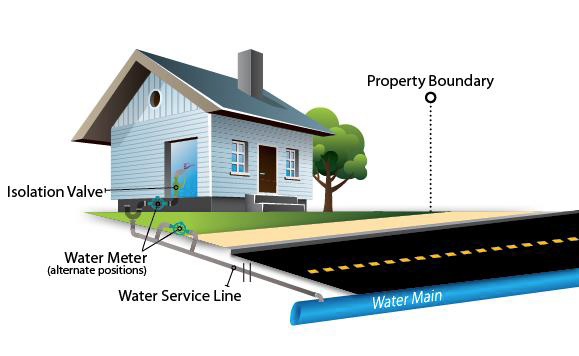
Typical location of a residential water service line (1)
How to Tell if You Have a Lead Service Line
To determine if your home has a lead service line you (or your plumber) need to inspect the service line.
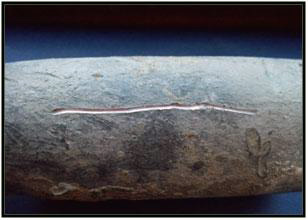
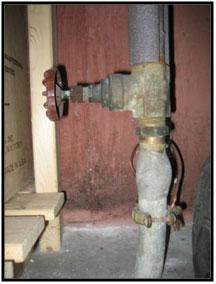
Lead service lines are generally a dull gray color and are very soft. You can identify them easily by carefully scratching with a key. If the pipe is made of lead, the area you've scratched will turn a bright silver color. Do not use a knife or other sharp instrument and take care not to puncture a hole in the pipe.
Ownership of the lead service line is typically shared between homeowners and your local water department. The homeowner typically owns the section of the pipe that is under the homeowner’s property.
The actual cost of service line replacement reflects a number of factors including the length of the service line, the technique used to install the new service line, and the environment where the service line is located.
Please contact your local water department to learn more about options for lead service line replacement and any payment assistance possible.
For Boston residents, please contact BWSC at 617-989-7000 or visit the following links: BWSC Lead Replacement Incentive Program (PDF), BWSC Lead Service Map.
When replacing lead service lines, it is best to replace the entire lead service line. The surest way to remove concerns about lead from lead service lines is to get all the lead out by removing the entire service line.
If a pregnant woman or child lives at your home, replacing the lead service line can be an important way to reduce the potential for lead exposure.
Contact Us
If you have questions or would like more information about lead in drinking water, please call our Water Quality Hotline: 617-242-5323, or email Beverly Anderson, Project Manager, Public Health.
Image credits
(1) Water service line illlustration courtesy American Waterworks Association
(2, 3) Lead service line photos courtesy EPA Region 5
Updated May 20, 2020